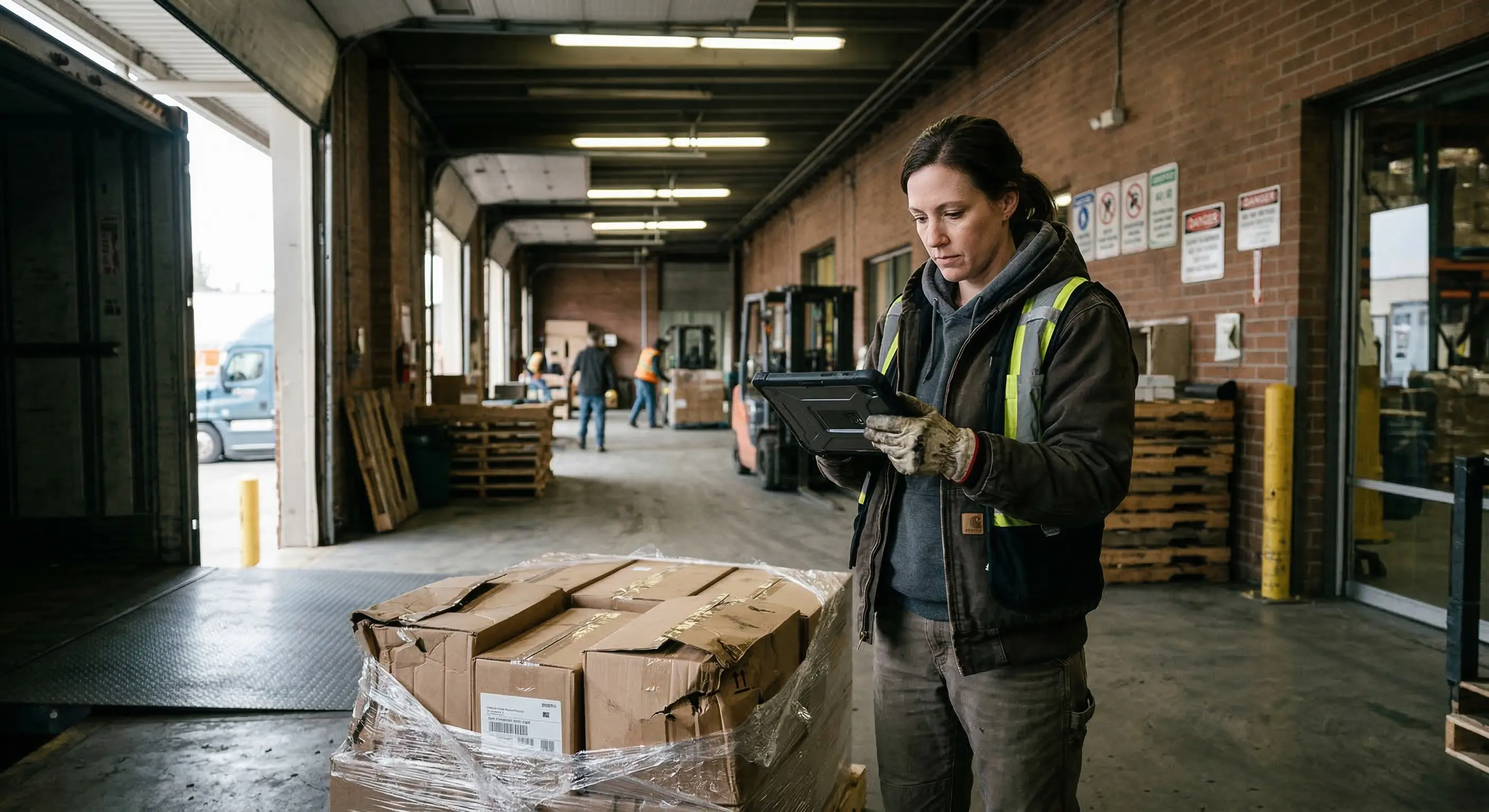
A barcode scan confirms delivery, but it conceals the truth about crushed corners or shattered materials on a pallet. While freight damage bleeds millions from supply chains, claims languish from disputes over where or how the damage occurred.
Facilities must often rely on rushed teams to spot defects while unloading trucks at maximum speed. When receivers discover broken goods hours later, the finger-pointing begins. This physical damage carries serious weight:
-
The global financial impact of cargo loss exceeds $50 billion annually. [1]
-
Less-than-truckload shipments face damage rates of 2% to 5% because of increased handling. [2]
Just as factories have begun to more aggressively adopt AI to catch defective parts and worn tooling during production runs, receivers should also leverage AI to better understand the drivers and safeguard against the risk of freight damage. Implementing AI computer vision systems at the dock fundamentally changes the dispute process. Digitally capturing cargo condition provides indisputable proof for claims and actionable data to improve the transport process overall.
VisionInspect.AI provides a practical way to train models using existing camera feeds or images. The software can identify leaning pallets, compromised wrapping, or hard-to-see impacts instantly. This documentation builds a flawless visual chain of custody, and it logs the exact state of the inventory at the moment of transfer. Flagging compromised loads early ensures warehouses can route claims directly back to the carrier, facilitates process improvement, and protects bottom-line revenue.
How do your inbound teams document the physical condition of damaged pallets upon arrival?
[1] https://www.approvedforwarders.com/tips-for-avoiding-costly-freight-damage/
[2] https://www.fleetworks.ai/resources/freight-damage-rates